Why object-based language becomes insufficient
Sometimes it is not observation that fails; it is the language we use to name it.
Look at a forest. It can be one you know, or one you simply imagine with care.
Watch it for a full minute before reading on.
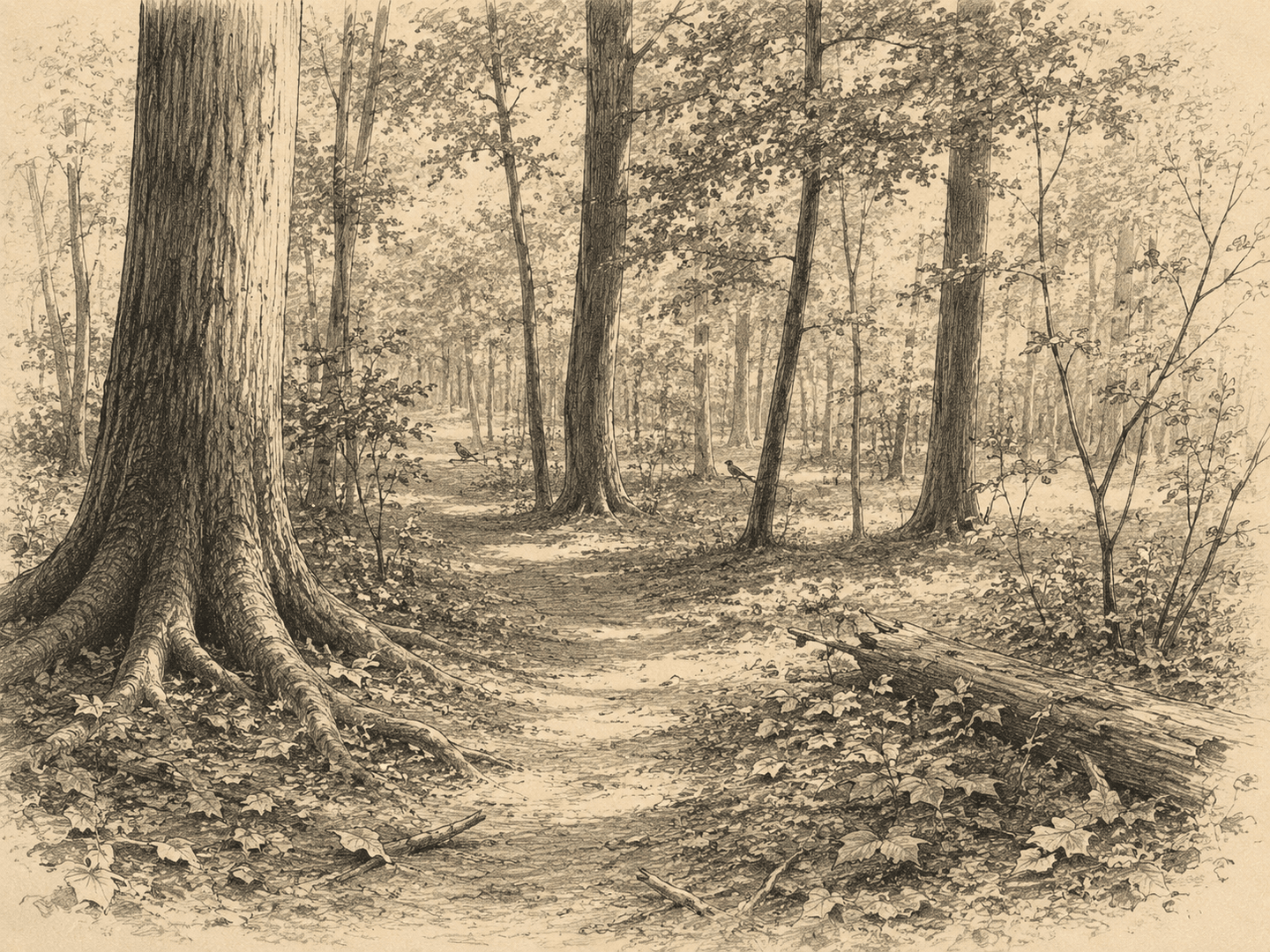
Now try to describe it. It is easy to start with a list: trees, leaves, soil, roots, birds, perhaps a path between the trunks.
That list is not wrong. But try answering a different question instead:
Why does it keep being a forest?
Stay with that question for a moment before continuing.
Your earlier list does not answer it. You can change specific trees, lose some leaves, gain others, watch one trunk die and a new shoot grow, and the forest keeps being a forest. The list of parts describes what is there. It does not explain why that holds together as a recognizable whole.
That small mismatch is the subject of this chapter.
It is not exclusive to the forest. The same happens with a river: you name water, streambed, and stones, and that list does not explain why the river keeps being the same river while the water changes at every instant. And the same happens with a conversation: you name the words that are spoken, and that list does not explain why the conversation stays alive, meaningful, instead of dissolving into noise. What sustains it is not the loose words, but the turns, the pauses, and the way each person responds to the one before. A conversation is not a pile of words, just as a forest is not a pile of trees.
For a long time we have learned to explain the world by naming parts: this has wheels, this has leaves, this has words. That habit works very well with objects that stay still. The problem appears when the phenomenon we are looking at is not an object but a process that sustains itself while changing. There, the list of parts starts to fail quietly: it stays true, but it stops being enough.
Look at three very different scenes.
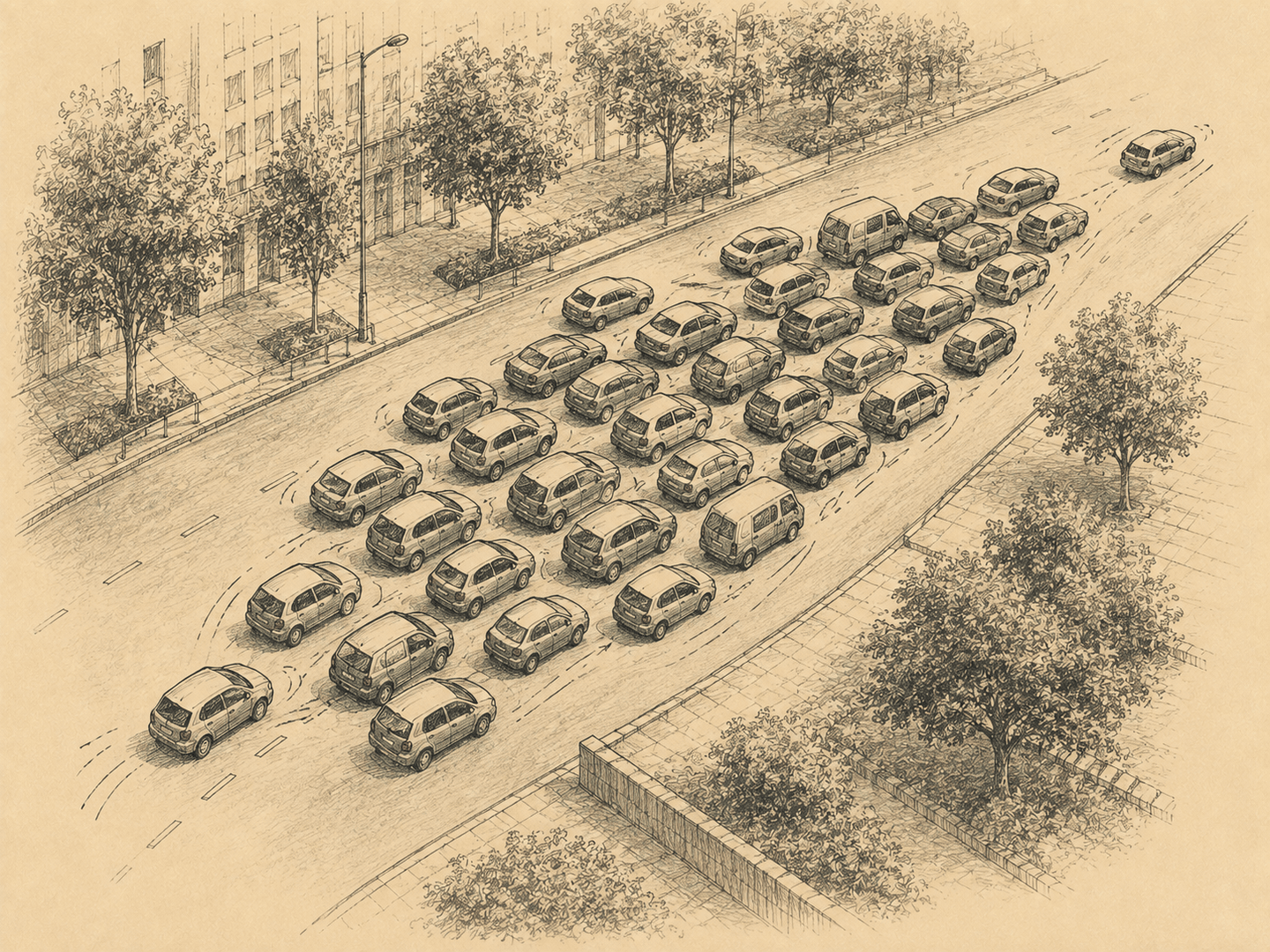
A traffic jam is not a pile of cars. It is a pattern that forms, moves, and dissolves, even though the specific cars keep changing all the time.
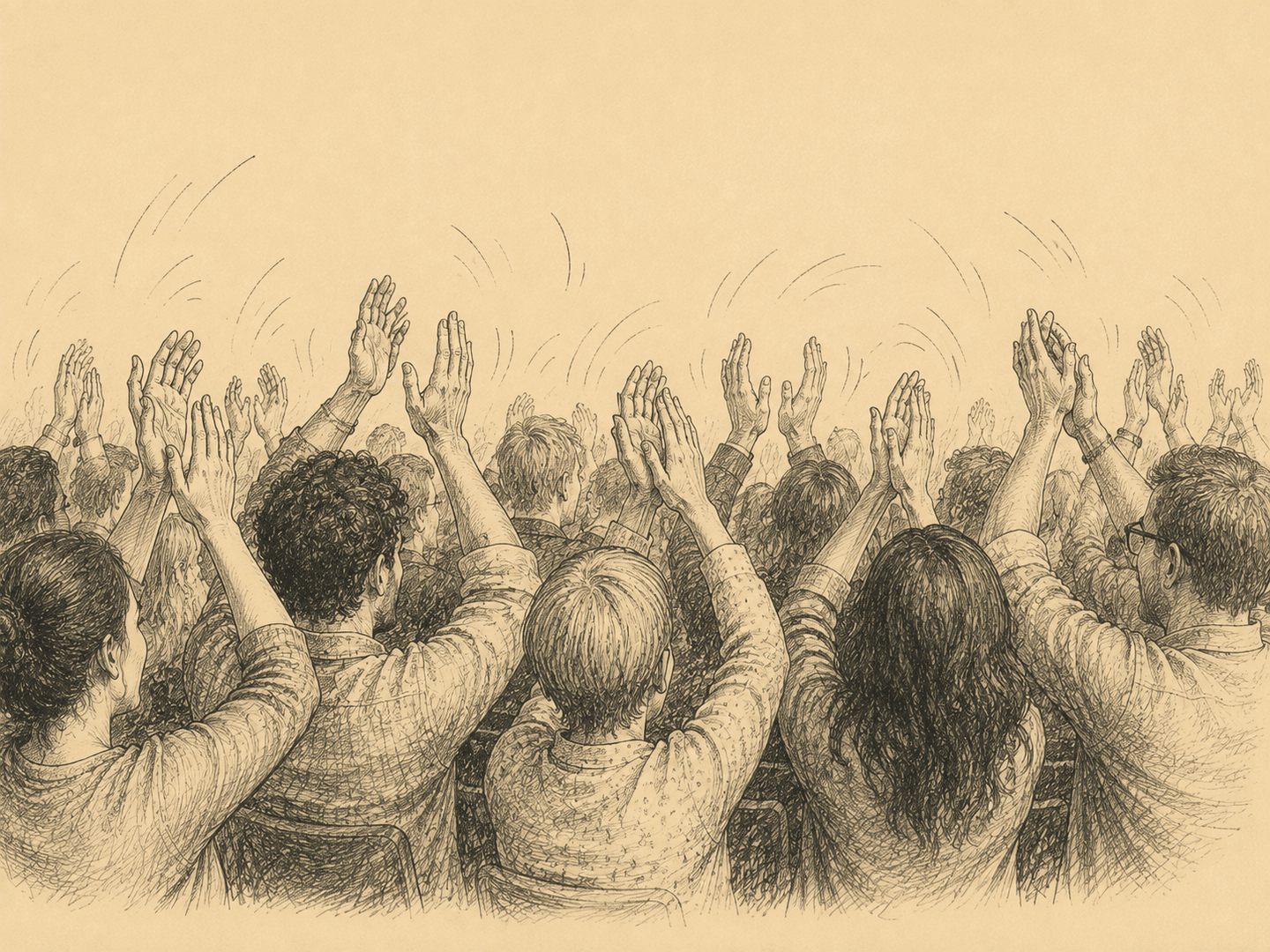
Applause is not a pile of hands. It is a collective rhythm that is born, synchronizes, and fades, even though each hand moves in its own way.
The internet is not a pile of computers. It is a network of relationships that keeps working even as each specific machine turns on, turns off, or gets replaced.
What do these three scenes have in common? In all three cases, the list of parts is correct, but it is not the explanation. The explanation lies somewhere else.
Now picture two drawings of the same forest, side by side.
First drawing. A list: tree, leaf, root, bird, soil.
Second drawing. The same scene, turned into a network: each word linked to the others by fine lines.
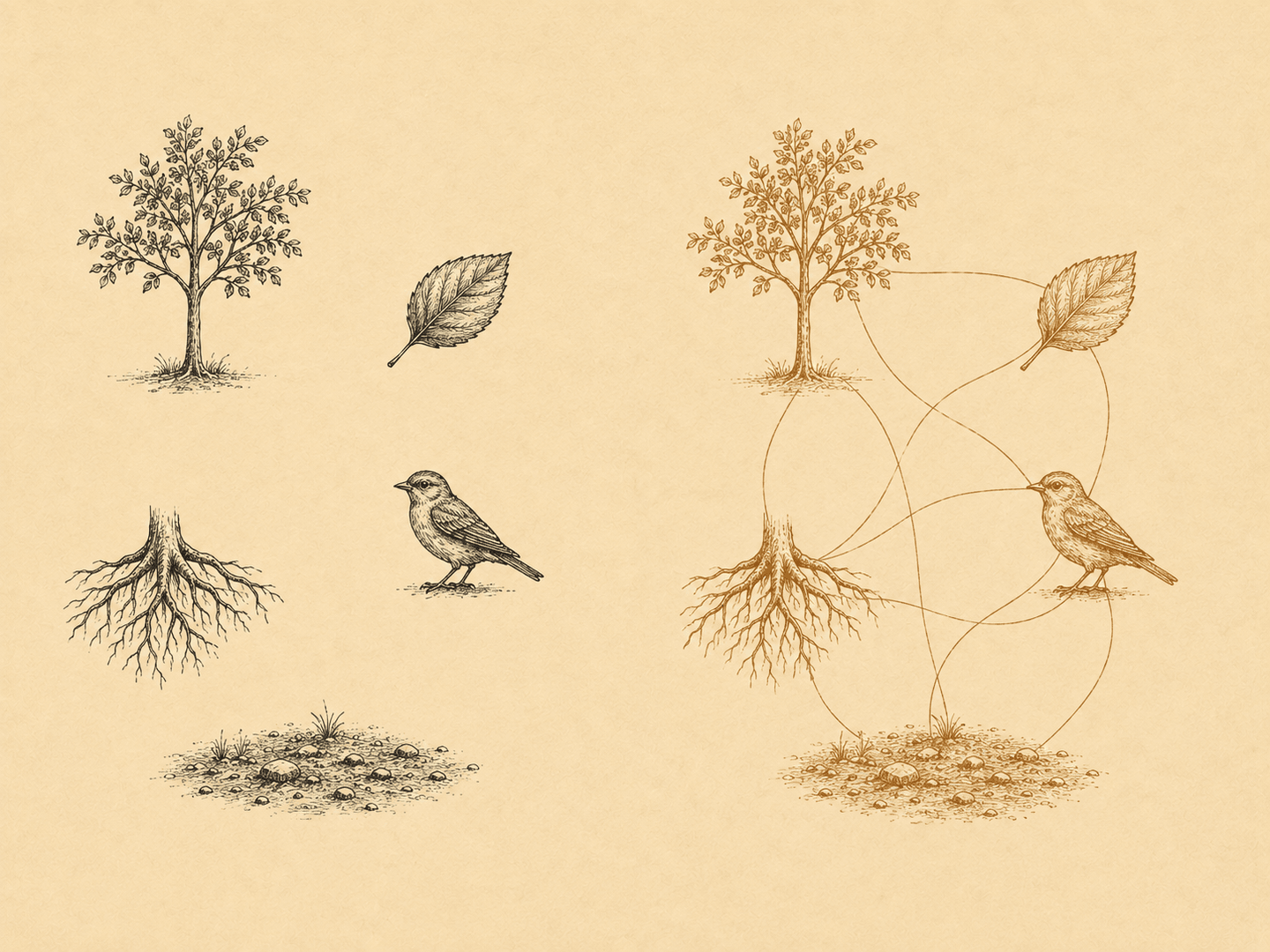
The first drawing answers "what is it made of?" The second answers "how does it hold together?" These are different questions, even though for a long time we have treated them as if they were the same one.
That shift — from "what it is" to "how it holds together" — is small to state and enormous in its consequences. As soon as you make it, the object stops being the final unit of explanation. The unit becomes the relation: what connects, what coordinates, what reorganizes when something changes.
It is worth being precise here. This does not mean objects are irrelevant, or that we should stop naming them. The forest needs real trees, just as the river needs real water and the conversation needs real words. What this chapter shows is more specific: naming parts is not enough when what we want to explain is the continuity of an organized process. There, object-based language is not wrong; it simply stops reaching far enough.
And that limit does not appear because the world is too complicated to observe. It appears because the language we use to describe it was built for another kind of thing: for what stays still, not for what sustains itself by changing.
Why this forces the next step
This chapter has not yet tried to build a new language. It has only shown, through a forest, a river, a conversation, a traffic jam, applause, and the internet, that the language we already use starts falling short exactly where we need it most: in systems that sustain themselves by organizing.
We still do not know what words should name those relations, or what rules such a language should follow. That is precisely what begins to take shape from here on.
What is already clear is that when language stops reaching reality, we do not need to observe less. We need to learn a better language.
And that is where the question this book now begins to answer appears:
What kind of language can better describe what sustains itself while changing?
Key ideas
- Naming a system's parts does not explain why that system holds together as a whole.
- A forest, a river, and a conversation share the same mismatch between a list of components and real continuity.
- Traffic jams, applause, and the internet show that this mismatch is not exclusive to nature.
- Moving from "what is it made of?" to "how does it hold together?" changes the unit of explanation: from objects to relations.
- Object-based language is not false; it simply stops reaching far enough where the phenomenon is an organized process.
The idea we take with us
When a list of parts no longer explains why something holds together, what is missing is not more observation: it is a language capable of naming relations.
Observation experiment
Choose a system with many visible parts: a forest or park with trees, a plaza with people, a traffic jam, or a roundabout with traffic.
Before observing, write:
- What you expect to observe.
- What you think will best explain the system's continuity.
For 10 minutes, follow these two steps:
- Make a simple list of its visible parts.
- Ask yourself, for each item on the list, whether it alone explains why the whole holds together.
After observing, add:
- What you actually observed.
- What changed in your explanation after looking closely.
To close, answer:
- Which relation between parts seemed most decisive for keeping the system working?
- What was missing from your initial list to explain the continuity of the whole?
- Complete this sentence:
"My list named the parts, but what held the whole together was..."